From Bathing Pavilion to Sporting Clubhouse
See how a seaside pavilion can bridge beach and sport, with practical ways to read its entrances, changing spaces, storage, and shared customs.
The common mistake is to treat a seaside pavilion as scenery or a handy shelter; that overlooks the work it does between shore and play. A bathing pavilion turned sporting clubhouse can shape where wet gear stops, where teams gather, and how beach users and players share the same edge.
A threshold, not a backdrop
Look at the pavilion as a boundary with a working life. On one side may be sand, shingle, or a slipway; on the other, a marked court, lawn, or pitch. The building mediates that change without making the shore feel like an extension of an indoor club.
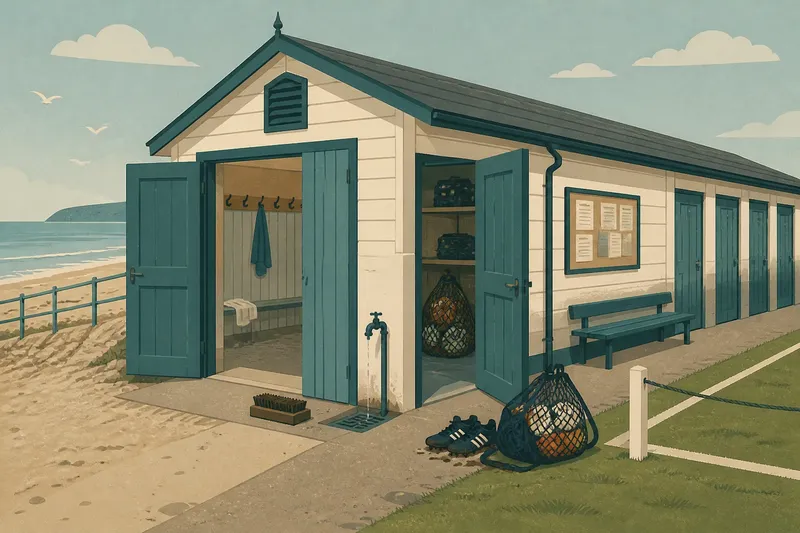
Its entrances often tell you more than its facade. A broad door facing the beach may have served bathers carrying towels and changing clothes, while a side entrance can now lead toward a storage room or team area. Notice which doors are open on a match day and whether people naturally pause there before carrying equipment out.
That pause is useful. It gives players a place to check footwear, leave a sandy bag, or wait for a group without blocking the route between public shore and playing space. If the threshold is narrow, keep conversations and kit clear of the doorway so other visitors can pass.
Old rooms, new routines
A pavilion’s original layout may remain visible even after its use changes. Rows of small doors can suggest former changing cubicles; a long bench may still serve anyone arriving from the water, even if the room now holds club notices or spare balls. These traces are not merely architectural curiosities. They reveal how the building once organized privacy, movement, and shared use.
Sport brings different rhythms. A team may arrive together, unload equipment, change footwear, and return to the same room after play. Bathers may come and go individually, carrying damp towels through the same corridor. A well-used clubhouse makes room for both patterns rather than quietly treating one group as the rightful owner.
When choosing where to leave a bag, look for a dry, out-of-the-way spot that does not claim a bench or block a changing area. Keep personal items together, and take valuables with you if the room is open to the public. The best place is often obvious once you watch how others move through the space.
Shared edges in practice
The pavilion can also make informal boundaries legible. A rinse tap, boot scraper, or outdoor bench may mark where wet and sandy equipment belongs. A noticeboard can show which area is reserved for a club session, while a public path still passes close by. These small cues help people coordinate without turning every encounter into a dispute.
Imagine a community club meeting at a pavilion that still welcomes swimmers. The players arrive with a mesh bag of balls and leave it beside the club’s storage door, not on the public bench; swimmers continue to use the changing corridor, and both groups keep the beach-side doorway clear. The observable result is a less congested entrance and fewer interruptions as each group comes and goes.
Club customs matter as much as the building. Ask where teams leave muddy shoes, whether a room is open to nonmembers, and which doors should stay clear. A short, friendly question is better than assuming that a familiar-looking bench or cupboard is available for everyone.
Reading a pavilion today
As you arrive, take in the building’s practical signals before settling in:
- Check the entrances. Identify the public route, the club route, and any door marked for staff or members.
- Look for wet-gear areas. A drain, mat, or rinse point can indicate where sandy footwear and damp equipment should stay.
- Notice the benches. Some may be intended for changing or waiting, not for storing a full team’s bags.
- Read the noticeboard. Session times and local rules can explain which spaces are shared and when.
- Find equipment storage without opening cupboards. Ask a club member before placing gear near a locked or marked room.
- Keep routes open. Leave doorways, ramps, and paths clear for people carrying boards, buggies, or sports kit.
Do not mistake age for abandonment. Weathered paint, salt-stained brick, and a plain interior can belong to an active place that gets regular care. Conversely, a clubhouse sign does not mean every room is public. If access or a facility’s use depends on local rules or posted instructions, follow those instructions and ask the operator when something is unclear.
What does the pavilion add?
Why keep a bathing pavilion in use?
Keeping an existing pavilion useful can preserve a sheltered meeting point and the practical link between changing, storing kit, and reaching the shore. Its value depends on whether people can use it safely and comfortably, not simply on retaining an old sign or facade.
How can visitors tell which spaces are shared?
Look for posted notices, open public entrances, and clear differences between public facilities and club rooms. If signs do not settle the question, ask the person responsible for the site before using a changing room or leaving equipment there.
What should players do with sandy equipment?
Use a designated rinse or storage area if one is provided, and avoid carrying loose sand into a dry room. A mesh kit bag can keep small items together, but it should not be left where it narrows a passage or takes a public seat.
Is a clubhouse always open to beach users?
No. Some pavilions combine public facilities with rooms reserved for a club, while others open only during staffed hours or scheduled activities. Treat signs and locked doors as boundaries, and check with the operator rather than assuming access.
Respect the in-between
Not every pavilion needs a dramatic restoration, a themed display, or an elaborate new use. Those additions are not worth the effort if they make everyday access harder or crowd out the simple facilities people rely on. A clear entrance, usable bench, and sensible place for wet gear can matter more.
From bathing pavilion to sporting clubhouse, the building’s strongest contribution is often its quiet coordination of different shore routines. Use the bathing pavilion as a cue to watch how the place works: where people pause, how wet and dry things are separated, and which spaces remain shared. Respecting those small arrangements helps the next player, swimmer, and passerby use the same stretch of coast without getting in one another’s way.