A Windy Day at the Ground: Pack for Comfort, Not a Forecast
Pack for a windy day at the ground with adaptable layers and a reachable comfort kit, so you can stay organized and adjust as conditions shift.
The common mistake on a windy day at the ground is dressing for the forecast headline and assuming the rest of the visit will feel the same. That can leave you cold while sitting still, overheated on the walk in, or fumbling with loose items in a gust. For a windy day at the ground, pack a few adaptable layers and comforts you can reach without unpacking everything.
Think through the visit: traveling, waiting at the entrance, sitting through play, walking around, and heading home. You do not need to predict every change; make a few sensible adjustments easy while keeping your hands and bag manageable.
Build Around Layers
Choose clothing that works together rather than relying on one heavy garment. A comfortable base layer, a warm middle layer, and an outer shell give you options as activity and exposure change. A breathable long-sleeved shirt under a fleece and a wind-resistant jacket is easier to adjust than a bulky coat that feels too warm as soon as you start moving.
Wind can make uncovered skin uncomfortable even when the air does not seem especially cold. A jacket with a close-fitting collar, secure cuffs, and a hood you can fasten may help reduce drafts. Avoid loose scarves or dangling ties in active crowds; tuck away anything that can flap across your face or catch on a seat.
Consider how your clothes feel while sitting, not only while walking. If a thin fleece or vest fits easily in your bag, it can add warmth without requiring you to remove your outer clothing.
Check the Seat
The ground itself changes what is useful to bring. A metal bench, a bare concrete step, and a covered seat have different comfort needs, even on the same day. Check the venue’s seating information for a backrest, shelter, or place to set a small bag before choosing extra items.
A foldable seat pad can make a hard or cold surface more comfortable, provided the venue allows it and it does not block access or take space needed by others. Choose one that is simple to carry and quick to stow. A large blanket may be more trouble than help if seating is tight or the wind keeps lifting its edges.
Think about where your feet will rest, too. For a long seated stretch, secure shoes and socks suited to the conditions matter more than footwear chosen only for a quick walk. Bring spare socks only if wet feet are a realistic concern and you have a dry, compact place to store them.
Make a Reachable Kit
Keep items you may need during play near the top of your bag or in an outside pocket. Searching beneath food, spare clothing, and bulky belongings while the wind presses against an open bag is frustrating. A small pouch or zippered pocket can keep essentials together.
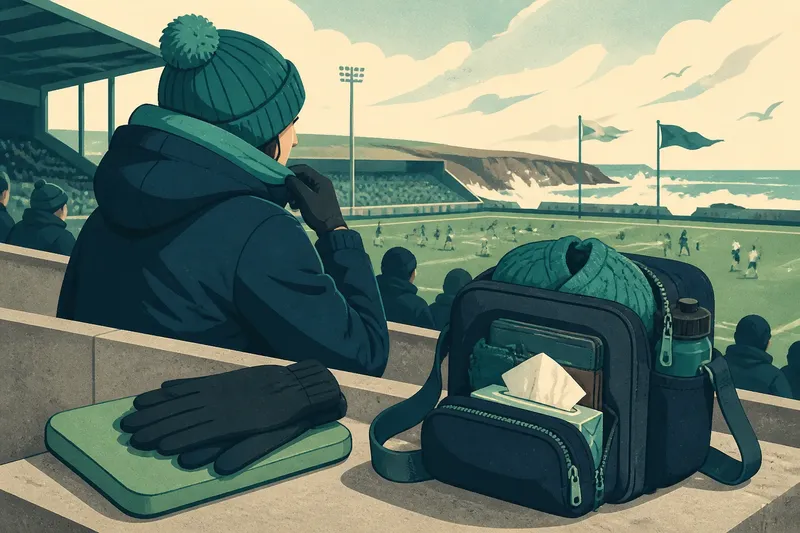
- Gloves: Check whether your hands tend to cool while you sit; if they do, pack light gloves in a reachable pocket, otherwise leave them out.
- Hat or headband: Check whether your ears are exposed and whether the item fits securely; if both are true, pack it, otherwise choose a snug alternative or skip it.
- Water: Check whether you can carry a bottle upright and closed; if so, pack it in a secure pocket, otherwise use a smaller container or leave it behind.
- Tissues: Check whether you have a compact pack and a closed pocket; if so, keep it within reach, otherwise avoid carrying loose tissues that can blow away.
- Seat pad: Check the venue’s seating rules and available space; if it is permitted and the seat is hard, bring a compact pad, otherwise leave it at home.
- Spare socks: Check whether wet feet are a realistic possibility and whether you have a dry place to store them; if both apply, pack a pair, otherwise skip the extra bulk.
- Bag closure: Check that zippers close and small items fit inside; if they do, use the bag as planned, otherwise switch to a secure pouch or another bag.
This is a comfort kit, not a reason to carry every item that might conceivably be useful. A second bulky coat, several backup accessories, or a large collection of “just in case” supplies can make moving through the ground awkward. It is not worth packing a large blanket if it will occupy a tight seat or keep catching the wind.
Protect Small Belongings
Gusts can turn light objects into distractions. Put tickets, cards, tissues, and wrappers in a zipped pocket or closed pouch instead of leaving them loose on your lap or in an open tote. Choose a bag that closes securely and sits comfortably against your body; a bag that swings or needs constant holding can make a crowded visit harder.
If you bring a cap, choose one that fits securely or has an adjustable fastening. Do not rely on an unattended scarf, program, or napkin to hold down loose items. Keep food packaging contained and use the venue’s bins when available rather than letting light rubbish blow across the seating area.
A closed pocket is usually more convenient for a phone than keeping it in your hand. If you want to check messages or take a photo, step out of a busy flow of people and keep a firm grip. For an ordinary visit, elaborate weatherproof gear is not worth the effort if a zipped pocket and sensible outer layer meet your needs.
Plan for Breaks
If the venue has an indoor concourse, sheltered stand, or permitted refreshment area, note where it is before you settle in. A brief pause can make it easier to warm your hands, drink water, or adjust clothing without making every small change at your seat.
Keep the route to a break simple. Put your bag where it will not obstruct other visitors, and take only what you need when moving away from your seat. If you are attending with someone who has different comfort needs, agree on a straightforward way to pause or meet again rather than assuming you will both want the same pace.
Plan for the return as well as the time at the ground. The walk back may feel different after sitting, and damp clothing or chilled hands can make it less pleasant. Keep an optional warm layer accessible so you can put it on before leaving, rather than finding it at the bottom of a crowded bag.
Work Through a Pack
Say you expect to sit through a match after walking from a nearby stop. You start with a long-sleeved shirt, a fleece, and a light shell; the venue information says the seat is uncovered, and you have a small zipped bag. You put thin gloves and a compact seat pad in an outside pocket, leave a spare heavy coat at home, and close the pouch holding your ticket and tissues. If you feel warm on the walk, you open the shell or remove a layer; if you cool while seated, the gloves and fleece are within reach. The tradeoff is carrying a few compact items, while the observable result is less rummaging and an easier change between walking and sitting.
Before packing any item that could be restricted, check the venue’s bag and seating rules. For clothing and equipment, follow the care label or manufacturer’s instructions where they matter; venue policies can vary, so a quick check is more useful than bringing something you may have to leave outside.
What Should You Pack?
Which layers work best for a windy match?
Use a comfortable base, a warm middle layer, and an outer layer that resists wind. Pick pieces you can put on or remove without struggling in a crowded seat, and avoid loose details that flap or catch.
Is a blanket useful at an outdoor ground?
A small blanket can help in open seating if it stays manageable and the venue permits it. In a crowded stand, a compact seat pad or extra clothing layer may be easier to keep in place.
Should I bring an umbrella?
An umbrella can be awkward around other spectators and may be unsuitable in exposed or crowded seating. Check the venue’s policy and consider a hooded outer layer instead if you want your hands free.
How can I keep my hands comfortable?
Pack light gloves in a reachable pocket and choose a pair that is easy to take off for ordinary tasks. If your hands warm up while walking, you can remove the gloves without repacking your whole bag.
Keep the Bag Light
For a windy day at the ground, prepare for a chill while seated, a gust against exposed skin, or a need to adjust between walking and watching. A few coordinated layers, a secure bag, and a short list of reachable comforts are more useful than carrying a solution for every possible change.
Before you leave, check that your outer layer closes, your small items are zipped away, and anything you may want during play is easy to reach. Then stop packing. A light, organized bag leaves you more room to enjoy the match and adjust as the visit unfolds.